

 Image Source
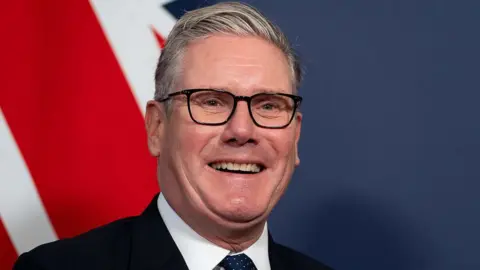
The Premier's remarkably clear shift on the United Kingdom's after-Brexit relations to the bloc on Saturday was intended to send a message to business, to European institutions, and to fellow EU nations, as well as his party members.
A New Process for Engagement
Closer post-Brexit economic relations are projected to be looked at as through an yearly cycle of bilateral talks as opposed to solely at the ongoing official assessment of the trade and cooperation agreement.
This represented the clear response to growing calls regarding a more ambitious renegotiation of relations that involved re-entering the EU customs bloc.
Parliamentary Pressure
Some MPs, union leaders and cabinet ministers have joined calls to suggestions crystallised by parliamentary moves last year that culminated in a non-binding vote.
"It is better prioritising the European single market as opposed to the customs union for our further alignment," Sir Keir Starmer said.
He provided a definitive response that returning to the customs union was a lower priority, as it goes against what he regards as a key achievement of the last twelve months: the conclusion of comprehensive trade pacts with the United States and the Indian subcontinent, with more expected in the Middle East.
Emphasising the Single Market
In place of the customs union, his emphasis is on forging a "closer relationship" with the internal market, which would not mean abandoning those international pacts globally.
When the UK officially exited the EU in the start of 2021, the agreement at the time emphasised liberation from EU standards over frictionless trade for UK businesses to the continent.
The ongoing recalibration outlines realigning with EU rules in specific fields to facilitate the smoother movement of trade: food and farm exports, energy, and the emissions market.
Commercial Calls
A major business group last month released a comprehensive series of further requests in other sectors to help exporters navigate post-Brexit red tape that has impacted the export of products.
Its internal research indicated that a large proportion of business members agreed that the current arrangement was not helping business expansion.
A range of additional sectors could, realistically, see a comparable strategy – alignment with single market rules – in as a trade-off for minimising trade obstacles across production, in vehicles, chemicals, or for example in value-added tax systems.
Continental Reaction
Member states were unimpressed by the lack of ambition in last year's reset, specifically the UK dismissal of ideas floated by some commentators regarding the simplified access of British goods to the single market.
The specific detail on energy cooperation and agricultural regulations is yet to be agreed. A initiative for UK companies to be part of a €150bn security initiative has been delayed over the cost of the membership fee, after opposition from Paris. Another nation has entered the initiative.
Broader Context
The UK has concluded arrangements to rejoin a student mobility programme and to continue talks on a young workers initiative. This has facilitated progress for ongoing dialogue.
Some UK insiders suggest that the recent publication of a key US strategy document has altered the context on UK ties to the EU.
The document said that the US would "foster opposition" to Europe's current trajectory and praised the "rising power" of patriotic European parties.
Among officials, there is an acknowledgement that the rapidly changing world has shifted once more.
Domestic Calculations
Domestically, the governing party also foresees being pressured on EU relations not only one political rival, but potentially others, which is campaigning in its traditional heartlands in May's elections.
The Premier's latest comments are borne of a confluence of business needs, politics and international relations as the UK embarks upon a year that will see the 10th anniversary of the landmark EU vote.


